A Binary Clock for Your Dev Desk
A column of dots looks like background decoration to most people — until they realize it's telling the exact time. Where it fits on a dev or homelab desk.
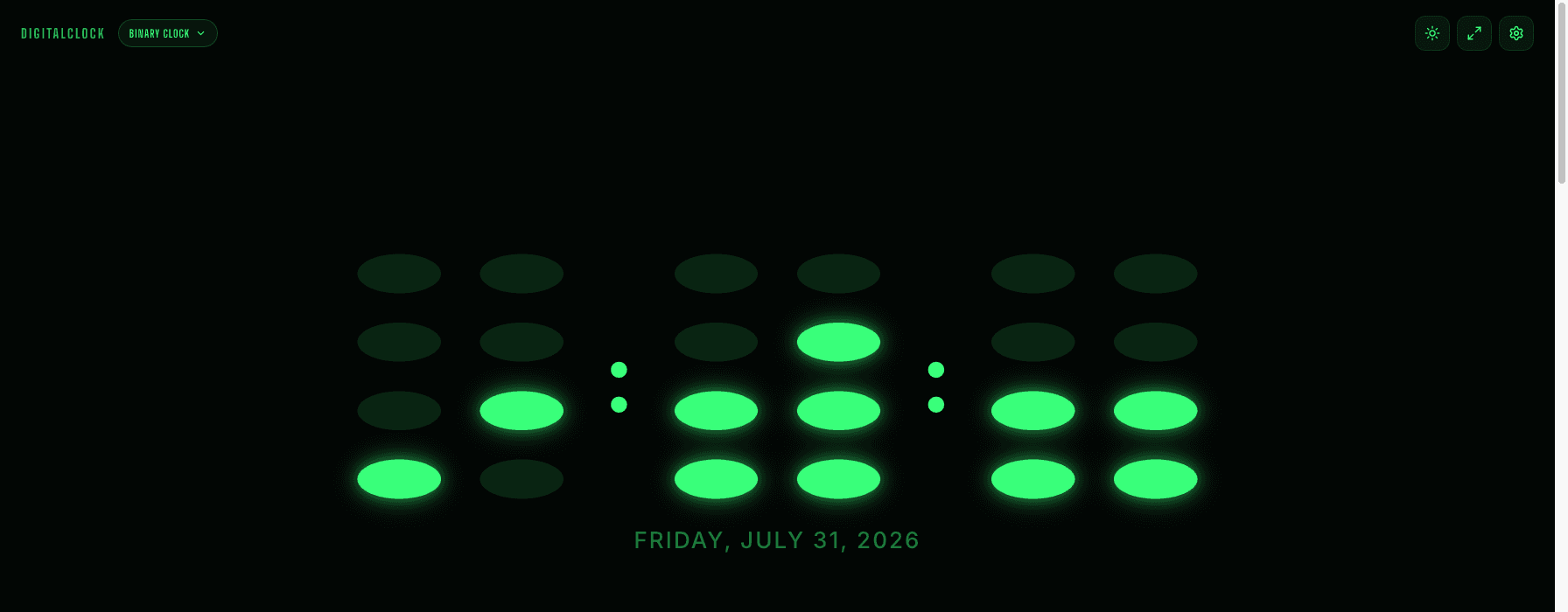
Most desk clocks are either invisible (a plain digital readout no one looks at twice) or distracting (anything with motion or color pulling focus from actual work). A binary clock splits the difference — it reads as an ambient grid of lights to anyone glancing over, and only reveals the time to someone who actually stops to do the arithmetic.
Where it fits
A corner of a monitor, a spare vertical display next to a main one, or propped on a shelf above a homelab rack — it already looks like it belongs next to blinking network switches and drive-activity lights, which a conventional clock face never quite does.
The quiet flex
It's the rare desk decoration that also functions as a filter: most visitors won't clock that it's a clock at all, and the ones who do are self-selecting for the kind of person who enjoys figuring things out. Binary Green reads closest to a classic terminal; Binary Amber trades the same brightness for a warmer, less blue-leaning glow.
No account, no extension, nothing to install — it's a browser tab like any other. If it's sitting somewhere you won't be touching it, flip on Keep Screen On in Settings so the display doesn't dim itself out.